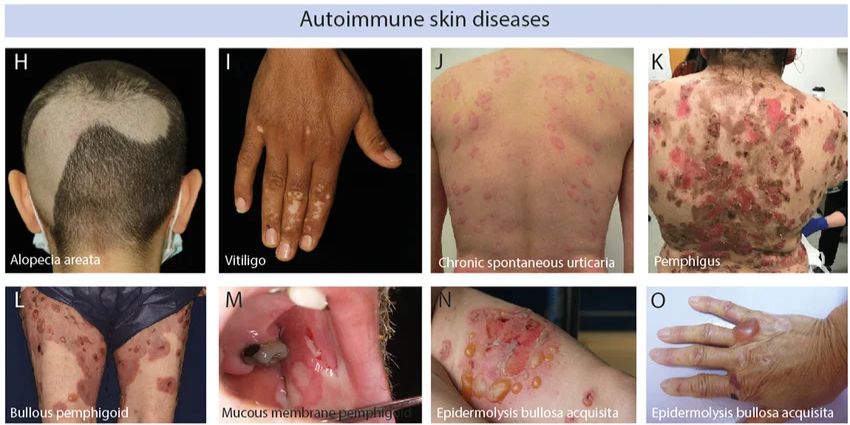
Common Symptoms
* Persistent skin rashes
* Red or inflamed patches
* Blisters or painful sores
* Thickened or scaly skin
* Skin discoloration or pigment changes
* Hair loss
* Nail changes
* Mouth or genital ulcers
* Itching, burning, or pain
Common Autoimmune Skin Diseases
* Psoriasis
* Vitiligo
* Alopecia Areata
* Pemphigus
* Bullous Pemphigoid
* Cutaneous Lupus Erythematosus
* Dermatomyositis
* Morphea (Localized Scleroderma)
* Lichen Planus
Common Risk Factors
* Family history of autoimmune diseases
* Genetic predisposition
* Environmental triggers
* Certain infections
* Stress
* Hormonal changes
* Certain medications
Diagnosis
A dermatologist diagnoses autoimmune skin diseases through a detailed medical history, physical examination, and, when necessary, laboratory tests, skin biopsy, dermoscopy, or immunological investigations.
Prevention
There is no guaranteed way to prevent autoimmune skin diseases. However, maintaining a healthy lifestyle, managing stress, protecting the skin from excessive sun exposure, and following your dermatologist’s advice may help reduce flare-ups in some conditions.
When to See a Dermatologist
Consult a dermatologist if you develop persistent rashes, unexplained blisters, skin discoloration, ongoing hair loss, painful sores, or other skin changes that do not improve. Early diagnosis and treatment can help control disease activity and prevent complications.
Note: Autoimmune skin diseases are not contagious. With early diagnosis, regular follow-up, and appropriate treatment, many patients can achieve good long-term disease control and maintain a healthy quality of life