Common Symptoms
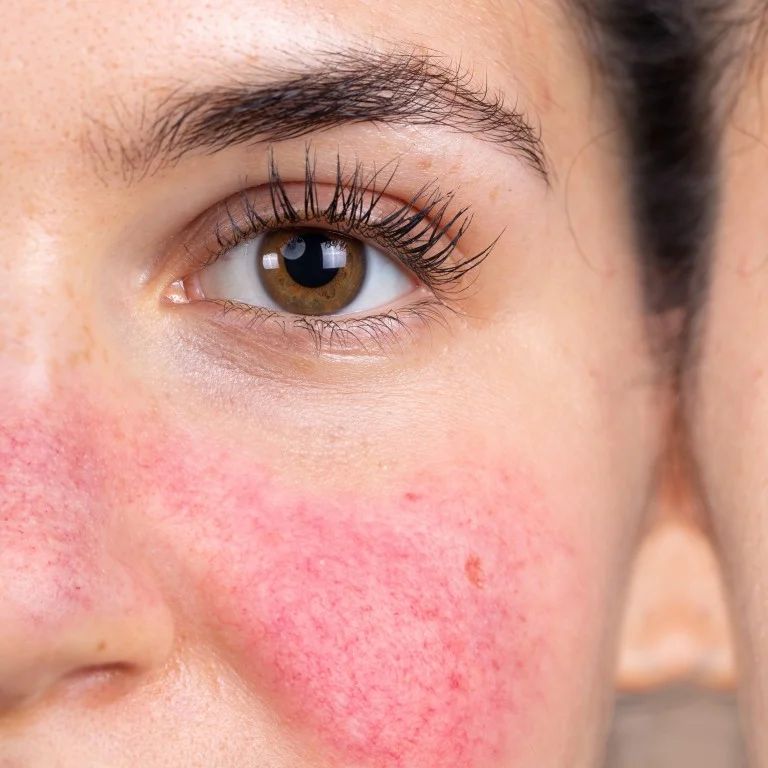
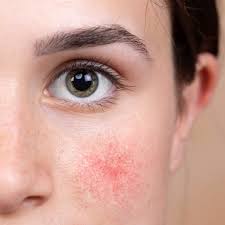
* Persistent facial redness
* Frequent flushing or blushing
* Small visible blood vessels (telangiectasia)
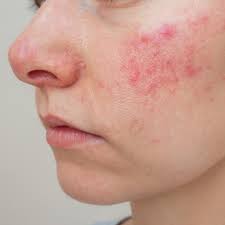
* Red bumps and pus-filled pimples
* Burning, stinging, or sensitive skin
* Dry or rough facial skin
* Eye irritation, redness, or watering (ocular rosacea)
Types of Rosacea
* Erythematotelangiectatic Rosacea (ETR): Persistent redness, flushing, and visible blood vessels.
* Papulopustular Rosacea: Red bumps and pus-filled pimples resembling acne.
* Phymatous Rosacea: Thickened skin, most commonly affecting the nose (rhinophyma).
* Ocular Rosacea: Involves the eyes, causing redness, irritation, dryness, and sensitivity.
Common Triggers
* Sun exposure
* Hot weather or heat
* Spicy foods
* Hot beverages
* Alcohol
* Emotional stress
* Strenuous exercise
* Certain skincare products
Diagnosis
Rosacea is usually diagnosed through a clinical skin examination by a dermatologist. Additional tests may be performed if another skin condition is suspected.
Prevention
* Use a broad-spectrum sunscreen (SPF 30 or higher) daily.
* Identify and avoid personal triggers.
* Use gentle, fragrance-free skincare products.
* Protect your skin from extreme temperatures.
* Avoid rubbing or irritating the skin.
When to See a Dermatologist
Consult a dermatologist if you have persistent facial redness, frequent flushing, acne-like bumps, or eye symptoms that do not improve. Early diagnosis and appropriate management can help control symptoms and prevent progression.
Note: Rosacea is a long-term skin condition with no permanent cure, but it can be effectively managed with proper skincare, trigger avoidance, and dermatologist-guided treatment.