Types
Corns
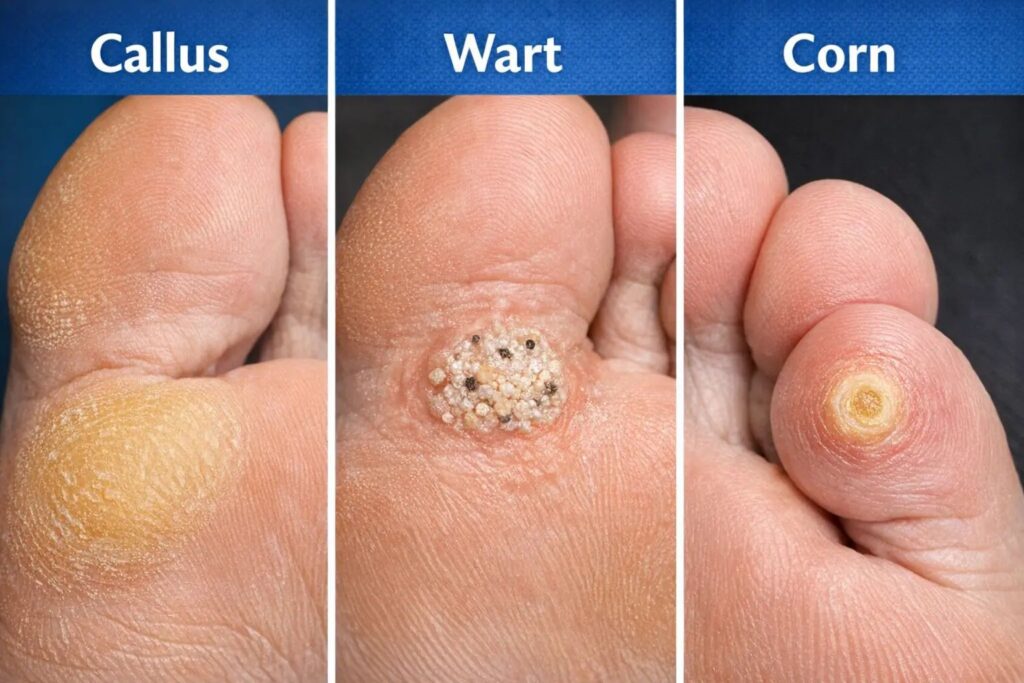
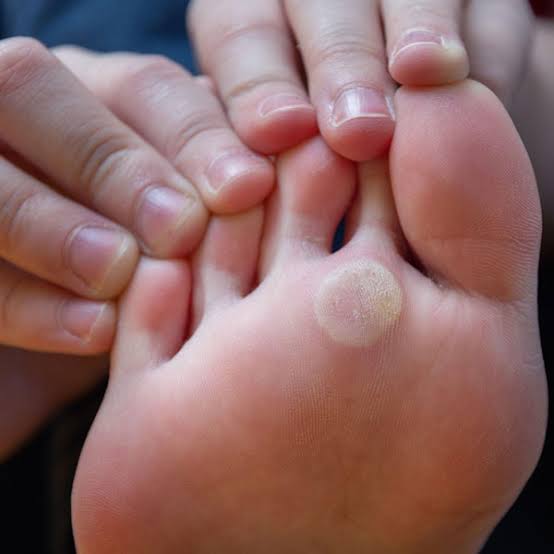
Corns are small, well-defined areas of thickened skin that usually develop on the toes or pressure points of the feet. They often have a hard center and may cause pain when walking or wearing shoes.
Common types include:
* Hard Corns
* Soft Corns (usually between the toes)
* Seed Corns (small, tiny corns on the sole)
Calluses
Calluses are larger, flatter areas of thickened skin that commonly develop on the soles of the feet, heels, palms, or fingers. They are usually less painful than corns but may become uncomfortable if they become very thick.
Common Causes
* Tight or poorly fitting footwear
* High heels or narrow shoes
* Frequent walking or standing
* Repeated friction or pressure
* Foot deformities such as bunions or hammertoes
* Manual work or repeated use of tools
* Walking barefoot
Symptoms
* Thick, rough, or hardened skin
* Yellowish or dry patches
* Pain or tenderness while walking
* Discomfort when wearing shoes
* Hard, raised bump (corn)
* Cracked skin in severe cases
When Should You See a Dermatologist?
Seek medical advice if:
* The corn or callus becomes painful.
* There is redness, swelling, or discharge.
* It keeps coming back despite proper footwear.
* You have diabetes, poor circulation, or nerve problems.
* You are unsure whether the lesion is a corn, callus, wart, or another skin condition.
Prevention
* Wear comfortable, well-fitting shoes.
* Use cushioned insoles or protective pads.
* Keep the feet clean and moisturized.
* Avoid prolonged friction or pressure.
* Trim toenails regularly.
* Never cut corns or calluses yourself with sharp objects.
Treatment
Most corns and calluses improve by reducing pressure on the affected area. A dermatologist can safely remove thickened skin and recommend appropriate treatment if needed. Persistent or painful lesions should always be professionally evaluated to rule out other skin conditions.