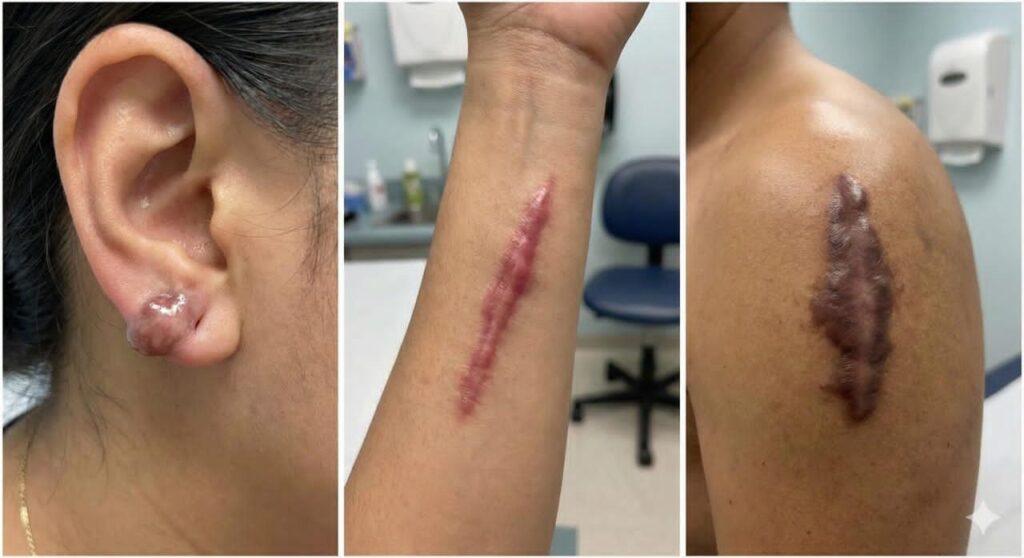
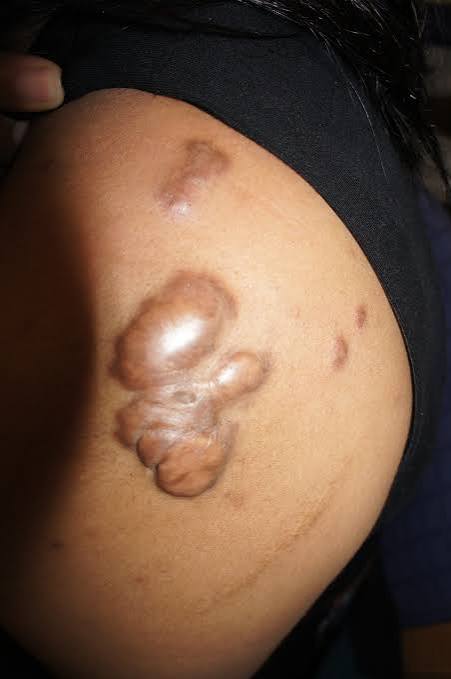
* Raised, smooth, shiny scar
* Extends beyond the original injury
* Pink, red, brown, or darker than surrounding skin
* Itching, tenderness, or discomfort
* May continue to grow over months or years
Common Sites
* Earlobes
* Chest
* Shoulders
* Upper back
* Jawline and neck
⸻
Hypertrophic Scars
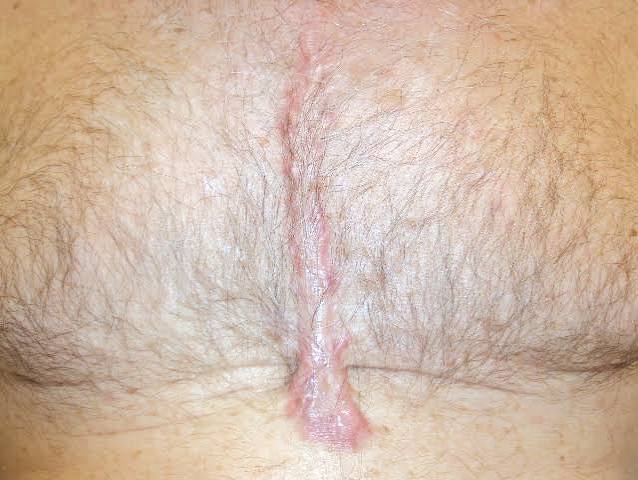
Hypertrophic scars are raised scars that remain within the boundaries of the original wound. They usually appear within weeks after an injury and may gradually flatten over time.
Common Features
* Thick, raised scar
* Limited to the original wound
* Red or pink in the early stages
* May feel itchy or slightly painful
* Often improves gradually over months to years
Common Sites
* Surgical scars
* Burns
* Cuts and lacerations
* Areas of high skin tension such as joints
⸻
Risk Factors
* Family history of keloids
* Darker skin tones
* Acne scars
* Burns or surgical wounds
* Ear or body piercings
* Repeated skin trauma
* Delayed wound healing
Symptoms
* Raised, thickened scar
* Firm or rubbery texture
* Itching or tenderness
* Pain or discomfort
* Cosmetic concerns
* Restricted movement if the scar is over a joint
When Should You See a Dermatologist?
Seek medical advice if:
* A scar continues to enlarge.
* The scar becomes painful, itchy, or bothersome.
* The scar limits movement.
* You develop a raised scar after surgery, burns, or acne.
* You are considering cosmetic scar improvement.
Prevention
* Practice proper wound care.
* Avoid unnecessary skin trauma or piercings if you are prone to keloids.
* Protect healing wounds from excessive tension.
* Follow your doctor’s instructions after surgery.
* Seek early evaluation if a scar begins to thicken.
Treatment
Treatment depends on the type, size, and location of the scar. A dermatologist may recommend one or more treatment options, including:
* Silicone gel or silicone sheets
* Corticosteroid injections
* Cryotherapy (freezing)
* Laser therapy
* Pressure therapy
* Surgical removal (in selected cases, often combined with other treatments to reduce recurrence)
Early treatment often provides the best cosmetic and functional results. If you notice a scar becoming thick, raised, or extending beyond the original wound, consult a dermatologist for timely evaluation.