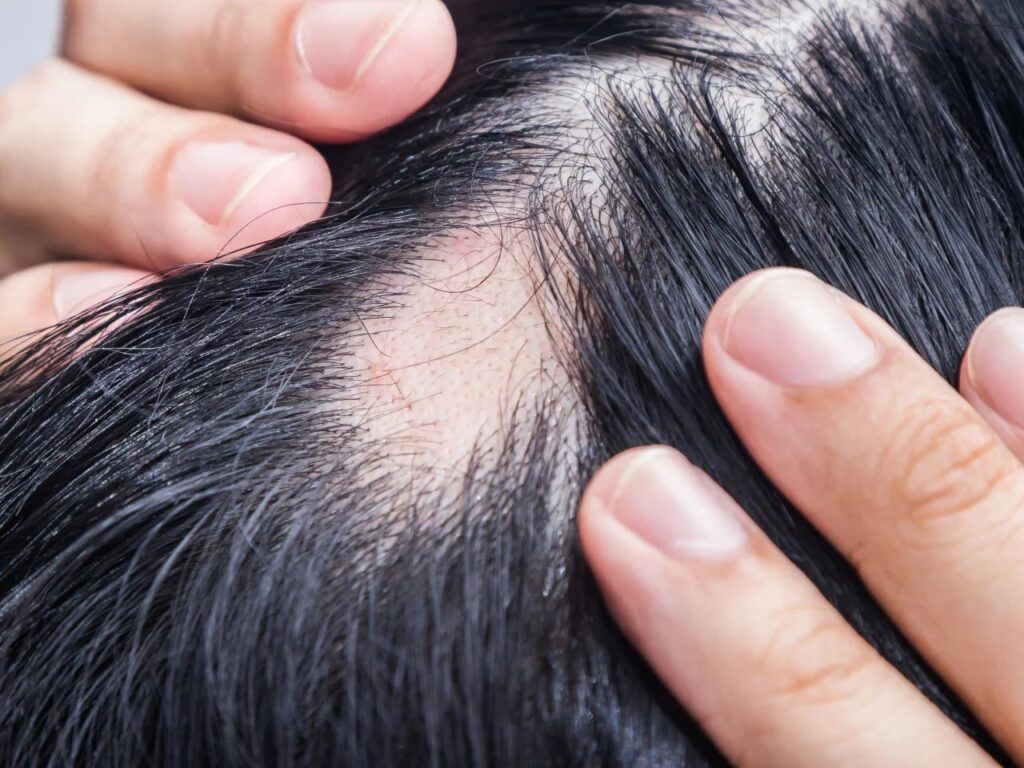
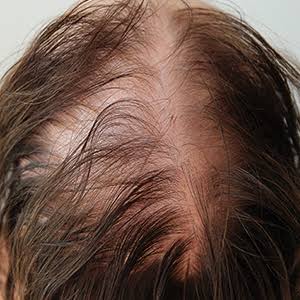
Common Symptoms
* Increased daily hair shedding
* Thinning of the hair
* Receding hairline
* Bald patches on the scalp or beard
* Widening of the hair part
* Reduced hair density
* Excessive hair on the pillow, comb, or shower drain
Common Types of Alopecia
* Androgenetic Alopecia: Male and female pattern hair loss caused by genetic and hormonal factors.
* Alopecia Areata: An autoimmune condition causing sudden, round patches of hair loss.
* Telogen Effluvium: Diffuse hair shedding, often triggered by stress, illness, childbirth, or nutritional deficiencies.
* Traction Alopecia: Hair loss caused by tight hairstyles or repeated pulling of the hair.
* Scarring (Cicatricial) Alopecia: Permanent hair loss due to destruction of hair follicles from inflammatory conditions.
Common Causes & Risk Factors
* Genetics
* Hormonal changes
* Stress or illness
* Nutritional deficiencies
* Thyroid disorders
* Certain medications
* Autoimmune diseases
* Tight hairstyles and hair damage
Diagnosis
A dermatologist diagnoses hair loss through a detailed medical history and scalp examination. Additional tests, such as blood tests, dermoscopy (trichoscopy), or a scalp biopsy, may be recommended to determine the underlying cause.
Prevention
* Eat a balanced, nutrient-rich diet.
* Avoid excessive heat and harsh chemical treatments.
* Use gentle hair care products.
* Manage stress effectively.
* Avoid tight hairstyles that pull on the hair.
* Seek early evaluation if hair loss is increasing.
When to See a Dermatologist
Consult a dermatologist if you notice sudden or excessive hair loss, bald patches, persistent thinning, or hair shedding lasting more than a few months. Early diagnosis can help identify the cause and improve treatment outcomes.
Note: Hair loss is often treatable, especially when diagnosed early. A dermatologist can determine the underlying cause and recommend the most appropriate treatment plan.