There are three main types: Neurofibromatosis Type 1 (NF1), Neurofibromatosis Type 2 (NF2), and Schwannomatosis.
Types of Neurofibromatosis
Neurofibromatosis Type 1 (NF1)
The most common form, usually diagnosed during childhood. It primarily affects the skin and peripheral nerves.
Neurofibromatosis Type 2 (NF2)
A less common type that mainly affects the nerves responsible for hearing and balance, often developing during adolescence or early adulthood.
Schwannomatosis
A rare form characterized by multiple schwannomas (nerve sheath tumors) without the typical features of NF2.
Common Symptoms
Skin Changes
* Multiple café-au-lait (light brown) spots
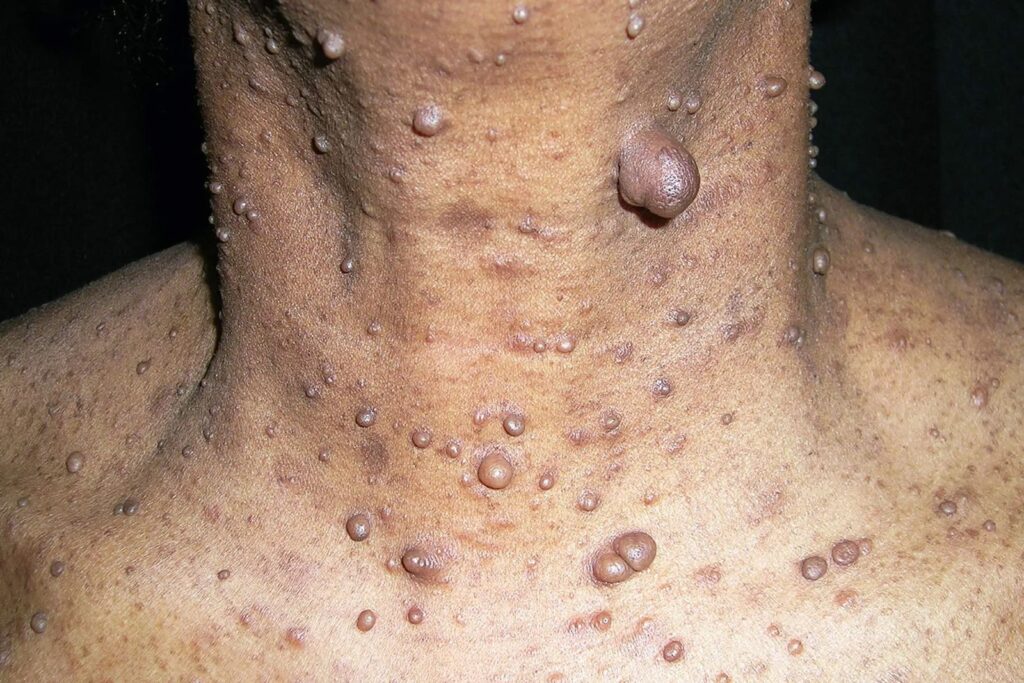
* Soft, skin-colored bumps (neurofibromas)
* Freckling in the armpits or groin
* Larger nerve tumors (plexiform neurofibromas)
Other Symptoms
* Vision problems
* Hearing loss or ringing in the ears (more common in NF2)
* Balance problems
* Bone abnormalities
* Learning difficulties (especially in NF1)
* Chronic pain or numbness in some patients
Causes and Risk Factors
* Inherited genetic mutation
* Family history
* New (spontaneous) genetic mutation in individuals without a family history
Diagnosis
Diagnosis is based on:
* Medical history
* Physical examination
* Family history
* Eye examination
* Hearing assessment (when indicated)
* MRI or other imaging studies
* Genetic testing in selected cases
When Should You See a Dermatologist?
Consult a dermatologist if:
* Multiple café-au-lait spots develop, especially in children.
* You notice numerous soft skin nodules or enlarging nerve-related lumps.
* There is a family history of Neurofibromatosis.
* Skin lesions increase in number or size.
* You develop new neurological symptoms such as hearing loss, vision changes, persistent pain, or weakness.
Important Facts
* Neurofibromatosis is not contagious.
* It is a lifelong genetic condition with variable severity.
* Symptoms can differ greatly, even among members of the same family.
* Early diagnosis and regular follow-up help detect complications and improve long-term care.
* Management often involves a multidisciplinary team, including dermatologists, neurologists, ophthalmologists, and other specialists.