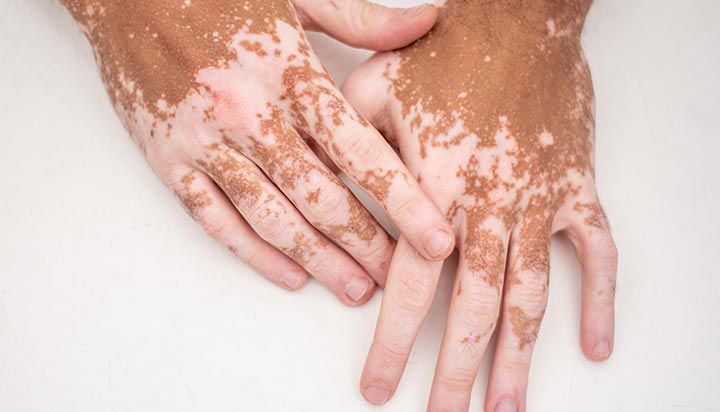
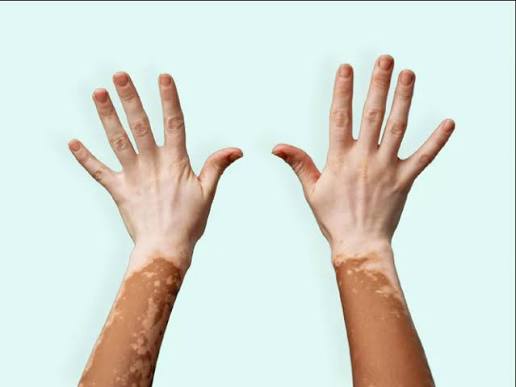
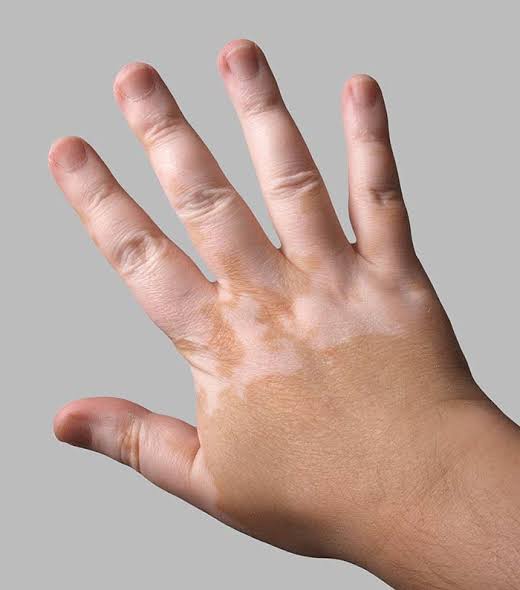
Vitiligo is a chronic, non-contagious skin condition in which the skin loses its natural pigment, known as melanin. This results in smooth, white patches appearing on different parts of the body. It can affect people of all ages, genders, and skin types, though it is often more visible on darker skin tones.
It is widely recognized as an autoimmune condition where the body’s immune system mistakenly attacks its own pigment-producing cells, called melanocytes.
Common Symptoms & Affected Areas
Well-defined, milky-white patches on the skin Premature whitening or graying of the hair on your scalp, eyebrows, eyelashes, or beard Loss of color in the tissues inside the mouth and nose Commonly affected areas include the face, hands, fingers, wrists, elbows, knees, feet, and areas around the eyes or mouth.
Common Triggers for Progression
Severe emotional stress or physical trauma Skin injuries such as deep cuts, chemical burns, or severe friction Severe sunburns Family history of vitiligo or associated systemic autoimmune conditions
Our Treatment Approach
Comprehensive evaluation to determine the stability and type of vitiligo Topical medications and specialized creams to calm the immune response and encourage repigmentation Advanced targeted light therapies to stimulate remaining pigment cells Personalized maintenance plans to stabilize spreading and protect sensitive white patches from sun damage Expert cosmetic counseling and camouflage guidance for immediate confidence support
Does Vitiligo spread over time, and can it be stopped?
The progression of vitiligo varies from person to person. For some, patches remain stable for years, while for others, they can expand rapidly. Modern dermatological treatments are highly focused on stabilizing active vitiligo first to halt the spreading before starting repigmentation therapies.
Are the white patches caused by Vitiligo painful or dangerous?
No, the white patches themselves are completely painless, non-itchy, and harmless. However, because these areas lack melanin, they have no natural protection against ultraviolet rays, making them highly susceptible to sunburns. Applying a broad-spectrum sunscreen to these patches is essential.
Can the original skin color be fully restored?
Significant repigmentation can often be achieved, especially on areas like the face and neck using early medical interventions. Spots on the hands, fingers, and feet tend to be more challenging to repigment, but modern combination treatments offer the best chance of restoring color.