Skip to content

Scrofuloderma

What Is Scrofuloderma?

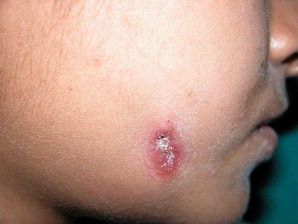
Scrofuloderma is a form of cutaneous tuberculosis (skin tuberculosis) that occurs when a tuberculosis infection spreads from an infected lymph node, bone, joint, or other underlying tissue to the skin. It is caused by Mycobacterium tuberculosis and is more common in areas where tuberculosis is prevalent.

Common Symptoms

* Firm, painless lumps beneath the skin
* Slowly enlarging swellings
* Skin breakdown leading to ulcers
* Draining sinuses that may discharge pus or fluid
* Scarring after healing
* Swollen lymph nodes, especially in the neck

Commonly Affected Areas

* Neck (most common)
* Armpits
* Groin
* Chest wall
* Areas over infected bones or joints

Causes and Risk Factors

* Tuberculosis infection
* Close contact with a person with active tuberculosis
* Weakened immune system
* Previous or untreated tuberculosis
* Living in or traveling to areas where tuberculosis is common

Diagnosis

Diagnosis is based on:

* Medical history and physical examination
* Skin biopsy
* Laboratory tests for tuberculosis
* Tuberculin skin test or interferon-gamma release assay (IGRA)
* Imaging studies when deeper tissues are involved

When Should You See a Dermatologist?

Consult a dermatologist if:

* You have persistent, painless skin swellings or ulcers.
* A skin lesion is draining pus for several weeks.
* You have swollen lymph nodes with overlying skin changes.
* The lesions do not heal with routine treatment.
* You have a history of tuberculosis or close contact with someone who has tuberculosis.

Important Facts

* Scrofuloderma is a form of skin tuberculosis.
* Early diagnosis is important to prevent complications and permanent scarring.
* It is different from ordinary bacterial skin infections and requires proper medical evaluation.
* A dermatologist may work with a chest physician or infectious disease specialist for comprehensive assessment and care.